
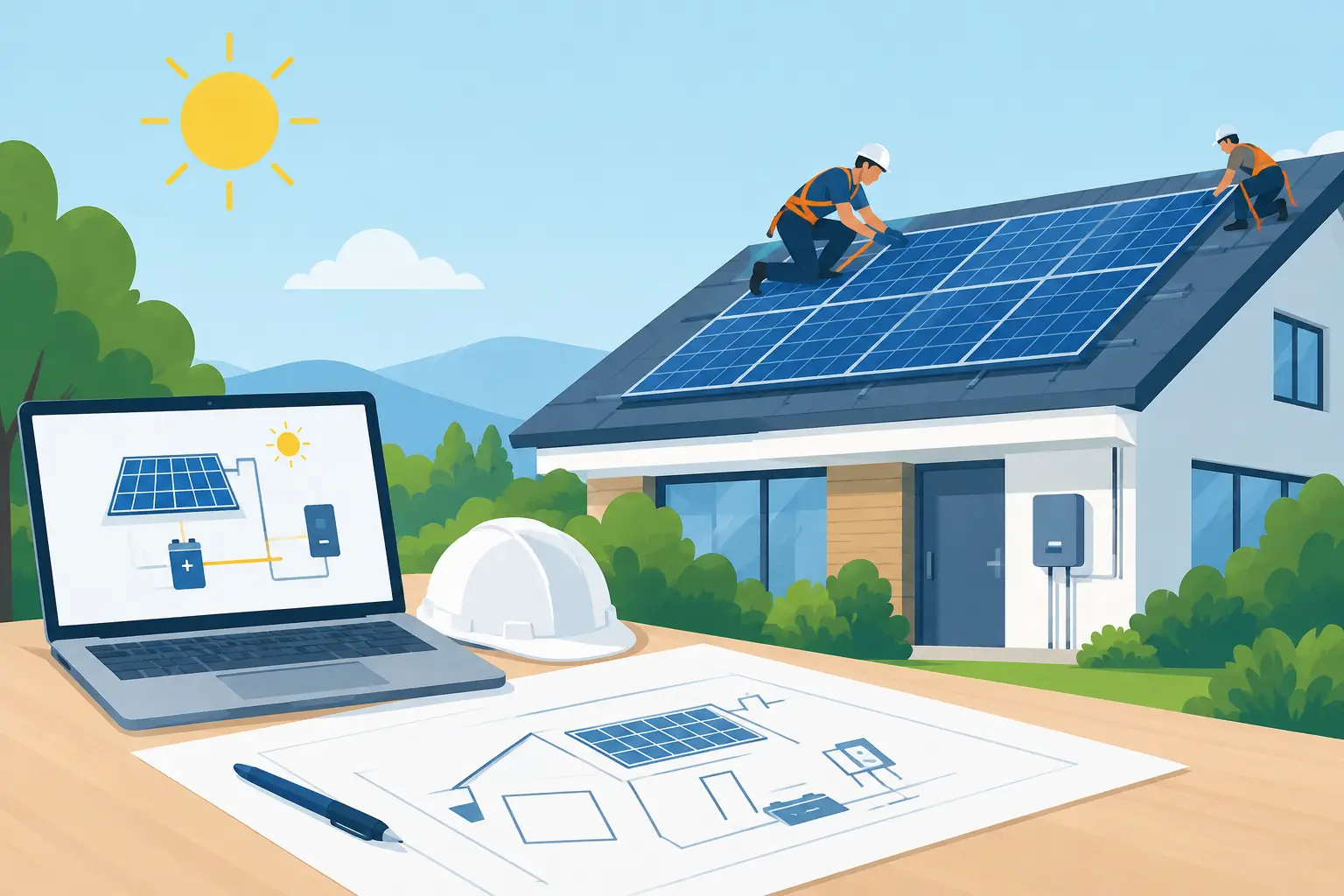
A solar system only performs as well as the decisions made before the first panel reaches the roof. Solar pv system design and installation is not simply a matter of fitting as many panels as possible. The roof layout, electricity use, consumer unit, cable routes and local grid connection all affect whether the finished system is safe, tidy and worth the investment.
For homeowners and businesses across Cheshire and the North West, the best starting point is a properly specified system built around the property rather than a standard package. That means realistic generation estimates, suitable equipment and electrical work that is fully tested before handover.
Start with the property, not the panel count
A site survey establishes what can be fitted safely and what the system needs to achieve. Roof orientation and pitch affect annual yield, but south-facing roofs are not the only viable option. East and west-facing arrays can produce useful power across more of the day, which may suit a household or business with morning and late-afternoon demand.
Shading needs careful assessment. A chimney, dormer, nearby tree or neighbouring building can have a greater effect than expected, particularly where it shades one section of an array at key times. The right design may use separate roof sections, optimisers or a different panel layout. In other cases, the sensible answer is a smaller array with a clearer outlook.
The survey should also consider the condition of the roof and its structure. Panels should not be used to disguise loose tiles, ageing felt or unresolved roof repairs. Access for installation, safe working arrangements and a route for cables from roof to inverter all need planning before work begins.
Understanding your electricity use
Generation figures are useful, but self-use is what usually makes solar valuable. A household that is empty during most daylight hours will use power differently from one with people working from home, an electric vehicle or electric heating. A business may have strong daytime demand and use a large share of solar generation directly.
Reviewing electricity bills and, where available, half-hourly usage data helps match the system to real demand. It prevents two common mistakes: installing a system too small to make a worthwhile difference, or oversizing it without a clear plan for exported electricity or battery storage.
Solar PV system design and installation: the key decisions
Once the survey is complete, the proposed design should explain the equipment and the reasoning behind it. Panel wattage alone is not a measure of quality. The complete electrical arrangement matters just as much.
The inverter converts the panels' DC output into AC electricity for use in the property. Its location needs ventilation, suitable clearances and a practical cable route. It should be accessible for inspection and servicing rather than hidden in an unsuitable loft corner or difficult-to-reach cupboard.
The array design must account for panel strings, voltage limits and any differing roof orientations. Where panels face different directions or experience unequal shading, the design may require separate maximum power point tracker inputs, optimisers or microinverters. These options can be useful, but they are not automatically necessary on every roof. Extra equipment should solve a defined design issue, not add cost without benefit.
The installation also needs to work with the existing electrical system. Before fitting solar, an electrician should assess the consumer unit, earthing arrangement, main supply capacity and condition of the relevant circuits. Older consumer units, inadequate protective devices or poor cable routes may need attention first. This is not an optional upgrade sold for its own sake. Solar generation introduces new circuits and protection requirements that must be properly coordinated with the rest of the installation.
For commercial and industrial premises, design work can be more involved. Three-phase supplies, higher demand, distribution boards, roof access, fire safety procedures and operational continuity all need consideration. A system may need to be installed in stages or planned around trading hours and site activity.
Battery storage changes the design conversation
Battery storage can retain surplus solar electricity for use later in the day. It can be particularly useful for households that generate most of their solar power while occupants are out, then use more electricity in the evening. It may also help properties with time-of-use tariffs, depending on tariff terms and usage patterns.
A battery is not essential for every solar installation. If a property uses much of its electricity during the day, direct solar consumption may already be high. Batteries add equipment cost, take up space and have a finite usable capacity, so they should be sized around a realistic objective rather than assumed to be the answer in every case.
If an electric vehicle charger, heat pump or planned extension is part of the picture, it is worth considering this early. A well-planned electrical installation can allow for future additions without untidy alterations or unnecessary disruption later. BMC Electrical Services NW can assess solar, battery storage, EV charging and the supporting electrical work as one coordinated project.
Grid approval, safety and compliance
A solar system must be connected in accordance with the applicable grid requirements. Depending on the equipment and system size, the local Distribution Network Operator may need to be notified before or after installation. This is often referred to through G98 or G99 processes. The correct route depends on the proposed system, its export capability and the supply arrangement at the property.
The contractor should manage the electrical side carefully, including isolation, circuit protection, labelling and testing. Solar panels generate electricity whenever they are exposed to daylight, so DC cabling and isolators require particular care. Cables should be secured, protected from damage and routed neatly, with clear identification for anyone working on the electrical installation in future.
Testing is not a paperwork exercise. It confirms that protective measures operate correctly, conductors and connections are sound, and the system performs as intended. On completion, customers should receive the relevant electrical certification, system information and clear instructions for normal operation. For eligible installations, appropriate certification may also be needed to access export payments, subject to the requirements in force at the time.
What a tidy installation looks like
Good solar work should be evident in the details. Panels should sit squarely on a secure mounting system, roof flashings and tiles should be left in good order, and external cable runs should be protected and unobtrusive. Inside, the inverter, isolators and any battery equipment should be sensibly positioned, labelled and easy to inspect.
A tidy finish is more than appearance. Unsupported cables, poor penetrations and inaccessible isolators can create maintenance and safety problems later. The aim is a system that looks considered, works quietly in the background and can be understood by the next electrician who attends the property.
For occupied homes, installation planning should also respect everyday life. Access arrangements, scaffolding, temporary power interruption and the location of equipment should be discussed before work starts. On commercial sites, this may include coordinating with facilities teams, health and safety procedures and other contractors.
Questions to ask before accepting a quotation
A worthwhile quotation should make the scope clear. It should identify the proposed panel capacity, inverter and battery specification where relevant, estimated generation, likely layout and any assumptions about the roof or electrical installation. It should also state whether scaffolding, DNO work, certification and any consumer unit alterations are included.
Be wary of promises that focus only on maximum savings. Solar output changes through the seasons, and savings depend on how much generated electricity is used on site, exported or stored. A sensible proposal explains expected performance without presenting a single idealised figure as a guarantee.
It is also reasonable to ask who will carry out the electrical work, how the system will be tested and what documentation will be provided. The answers tell you far more about an installation than a headline panel price.
After installation: get more from the system
Once the system is operating, check the monitoring app regularly during the first few weeks. It helps confirm that generation follows the expected pattern and shows when the property is importing or exporting electricity. Small changes, such as running appliances during daylight hours or scheduling vehicle charging around available generation, can improve self-consumption.
Panels generally need little routine attention, but visual checks from ground level are sensible after severe weather. Do not climb onto the roof to inspect or clean them. If generation drops unexpectedly, warning messages appear, or electrical equipment is damaged, arrange a professional inspection.
A well-designed solar system should feel straightforward once it is in place: safe on the roof, properly wired at the consumer unit and clearly documented for the years ahead. Choosing a contractor who surveys carefully, explains the trade-offs and leaves the work fully tested gives the investment the solid foundation it deserves.