
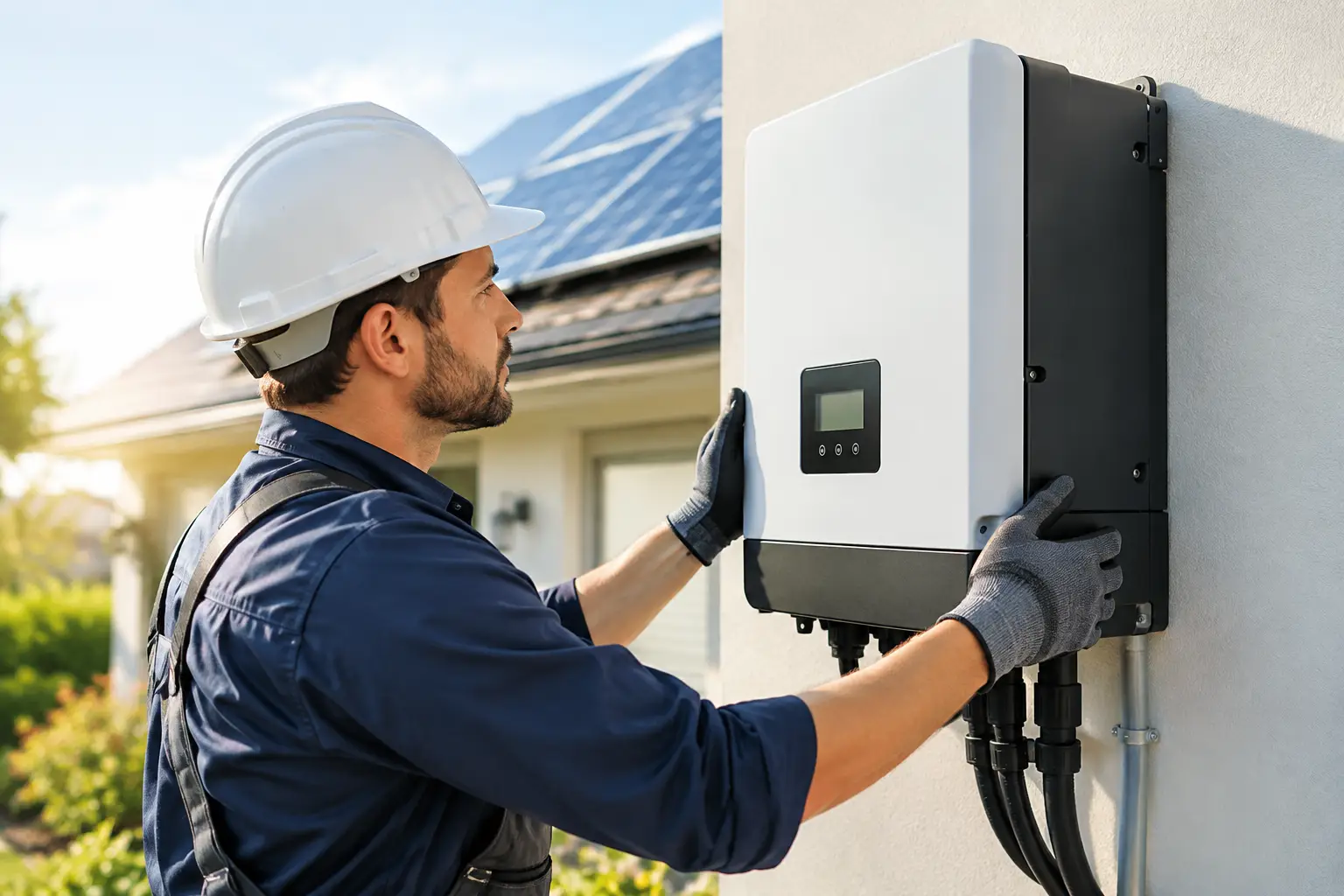
A solar PV system can keep generating for decades, but the inverter is usually the component most likely to need attention first. Solar inverter replacement cost is therefore a sensible question for any homeowner or business relying on solar to reduce electricity bills. The right answer depends on the system already installed, the type of replacement required and whether the fault genuinely sits with the inverter.
For a straightforward domestic system, a like-for-like inverter replacement commonly falls between £800 and £2,000 supplied and installed. That range is useful for initial budgeting, but it should not replace a proper inspection. A competent electrician or solar installer should identify the cause of the fault, confirm the replacement is correctly specified and fully test the system before it is returned to service.
Typical solar inverter replacement cost in the UK
Most residential string inverter replacements sit within the £800 to £2,000 range. At the lower end, this may cover a smaller, readily available inverter fitted in an accessible location, with little or no alteration to existing cabling. At the higher end, the work may involve a larger inverter, a hybrid model, remedial work to isolators or cables, commissioning, monitoring setup and notification requirements.
The inverter itself is often the largest part of the bill. A standard domestic string inverter can cost several hundred pounds, while higher-capacity units and hybrid inverters designed to work with battery storage cost more. Labour is not simply the time taken to change a box on the wall. The installer also needs to isolate the system safely, inspect the DC and AC sides, programme the new unit, prove correct operation and check that protection arrangements remain suitable.
For commercial properties, costs can be considerably higher. Larger three-phase inverters, rooftop access arrangements, system downtime and more involved commissioning all affect the price. A commercial replacement should be planned around safe access and operational needs, rather than treated as a quick swap.
What changes the price?
The system size and inverter type are the first considerations. A 3.6kW inverter serving a typical home is generally less expensive than a 6kW or 10kW unit. A hybrid inverter may be the right choice where a battery is already installed or planned, but it needs to be compatible with the battery, solar array and existing electrical arrangement.
Accessibility matters too. An inverter in a clear garage or utility room is easier to replace than one in a loft, on an external wall at height or within a plant room with restricted access. Where the original installation is untidy, poorly labelled or has deteriorated isolators, the replacement work may uncover issues that should be corrected for safety.
The age and condition of the existing system also affect the final figure. Older systems can have obsolete components, damaged DC connectors, weathered external switches or cabling that no longer meets the expected standard. Reusing sound equipment is sensible. Reusing parts that are overheated, brittle or unsuitable is a false economy.
Monitoring can add another variable. Many older inverters use discontinued communication equipment or rely on outdated apps. A new inverter may need a new data logger, Wi-Fi connection or an update to the monitoring platform. This is not essential for generation itself, but good monitoring helps identify performance problems early and gives the owner a clearer view of savings.
Check the warranty before approving replacement
Many inverter manufacturers offer warranties of around five to 12 years, and some products can be registered for longer cover. The solar panels may still be within a much longer performance warranty when the inverter fails, so do not assume the whole system has reached the end of its useful life.
Check the inverter serial number, installation date, original paperwork and whether the product was registered. A manufacturer warranty may cover the replacement unit but not always the labour, access equipment, testing or any changes needed to install the new model. If the original installer is no longer trading, an independent qualified contractor can still diagnose the issue and advise what evidence is needed for a claim.
It is also worth checking whether the fault has been diagnosed correctly. An inverter warning message can be caused by low grid voltage, a tripped breaker, failed AC or DC isolator, communication fault or a problem on a string of panels. Replacing the inverter before testing these areas can leave the underlying issue unresolved.
Like-for-like replacement or an upgrade?
A like-for-like replacement is often the most cost-effective route when the solar array is performing well and the existing system design remains appropriate. It restores generation with minimal disruption and avoids changing equipment that does not need changing.
An upgrade can make sense where the old inverter is undersized, monitoring is no longer supported or battery storage is part of the plan. Hybrid inverters can provide a neater route into battery storage, but they are not automatically the best answer. In some cases, an AC-coupled battery can work well with a standard solar inverter, especially where the current PV system is otherwise sound.
The decision should be based on how the property uses electricity. A household that is out during the day may gain more from storage or smart control than one with high daytime demand. For businesses, load patterns, export arrangements and the capacity of the supply should all be reviewed before changing inverter technology.
Why correct specification and testing matter
An inverter must be matched to the solar array and the electrical supply. Its DC voltage and current limits need to suit the panels and string layout. On the AC side, the unit must operate correctly with the property’s earthing, protective devices and grid connection arrangements.
Where inverter capacity or export settings change, the Distribution Network Operator requirements may also need consideration. This is particularly relevant for larger systems, three-phase supplies and installations that export more power than before. A professional installer will identify the correct process rather than leaving the property owner to deal with technical paperwork after the work is complete.
Once fitted, the replacement should be commissioned and tested properly. That includes confirming polarity, insulation resistance where appropriate, protective-device operation, generation performance and safe shutdown. Labels, circuit schedules and handover information should be updated as needed. These checks protect the equipment, but more importantly they protect the people using and maintaining the building.
Signs that an inverter may need attention
A blank display, repeated fault code or zero generation on a bright day clearly needs investigation. Less obvious signs include a steady decline in output, frequent disconnections, unusual noises, water ingress around external equipment or monitoring that shows generation stopping at the same time each day.
Do not open inverter covers or attempt DC work yourself. Solar panels generate electricity whenever there is daylight, and DC isolation needs to be handled correctly. If the inverter is showing a fault, note the message, take a photograph of the display if safe to do so, and arrange a qualified inspection.
Getting a useful quotation
A meaningful quotation should state whether it includes the inverter model, labour, testing, commissioning, monitoring setup and disposal of the old unit. It should also make clear any assumptions about access and whether faults in existing cabling, isolators or consumer-unit protection are included.
The lowest figure is not always the lowest overall cost. An unsuitable inverter, rushed installation or missing test records can create further expense and leave the system unreliable. For properties in Northwich and the surrounding area, BMC Electrical Services NW can assess the existing installation, explain the options plainly and carry out replacement work safely, tidily and fully tested.
If your solar system has stopped generating, the practical next step is not to guess at the part that has failed. Arrange a proper fault diagnosis first, then choose a replacement that keeps the system safe, compliant and working hard for the years ahead.