
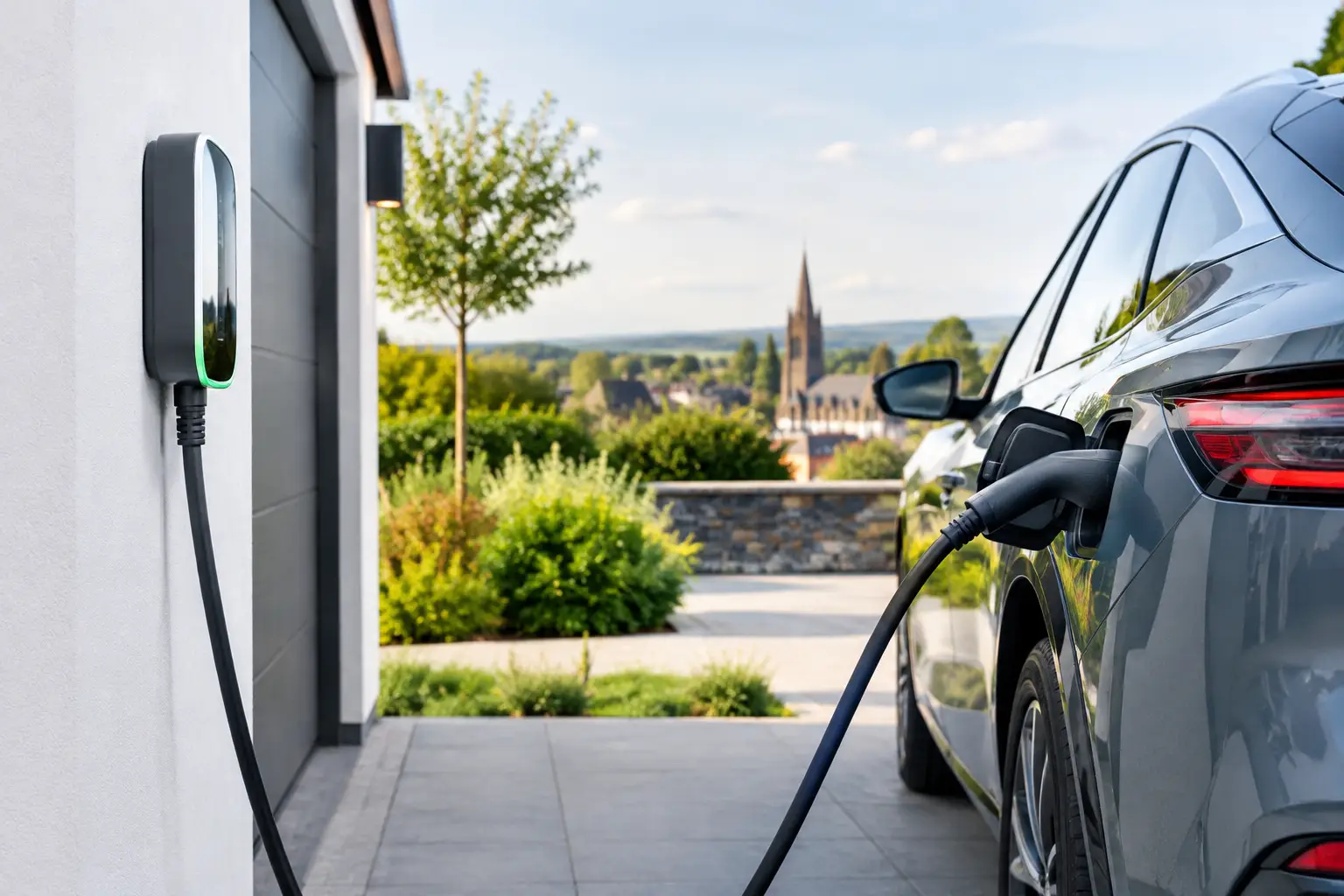
A new electric vehicle should make daily travel simpler, not leave you relying on public chargers or trailing extension leads across a driveway. Properly planned EV charging gives you a dependable place to charge, at the right speed for your routine, with the electrical installation designed to handle the additional demand safely.
For homes, that often means charging overnight when the vehicle is parked anyway. For businesses, it can mean supporting staff, visitors or a growing fleet without putting unnecessary pressure on the building’s supply. The charger itself matters, but the quality of the electrical design, installation and testing matters just as much.
EV Charging Starts With the Way You Use Your Vehicle
The right charging point is not simply the highest-rated unit available. It should suit the vehicle, where it is parked, how far it travels and the capacity of the property’s electrical supply.
A typical home charger is rated at 7kW and is a practical choice for many drivers with access to off-street parking. It can add a useful amount of range overnight and is considerably more convenient than charging from a standard socket. A 3.6kW charger may be appropriate where supply capacity is limited or charging time is less critical. Faster three-phase charging is possible at some commercial premises, but it depends on the incoming supply, available capacity and the needs of the vehicles using it.
Before specifying a charger, it is worth considering the times that charging will actually happen. A household with one vehicle that covers modest daily mileage has different requirements from a business with several vans returning to base at 5pm. Installing more capacity than needed can add cost without providing a meaningful benefit. Under-specifying the system can be equally frustrating once vehicle use changes.
Home charging: convenience without compromise
For homeowners, the usual aim is straightforward: arrive home, plug in, and start the day with enough charge for the next journey. The preferred location may be a driveway, garage or car port, but the cable route back to the consumer unit needs equal attention.
A neat installation avoids cables being exposed where they could be damaged, obstruct access or create a trip risk. External equipment must also be suitable for the environment, with correct protection against weather and appropriate positioning away from likely vehicle impact.
The charging point should normally be supplied by its own correctly selected circuit. The installer must assess protective devices, earthing arrangements, cable size and the condition and capacity of the existing consumer unit. These are not details to leave until the final stage. They determine whether the installation is safe and whether the charger can perform as expected.
Workplace charging: plan for growth
Workplace EV charging can be a useful staff benefit, a practical facility for customers or a route towards lower-emission fleet operation. It also introduces more variables. A site may need to manage access, charging costs, parking arrangements, usage rules and the impact of several vehicles charging at once.
For a small office or retail site, one or two charge points may be enough. For industrial premises, depots and larger workplaces, the better approach is often to plan the infrastructure for future expansion, even if only a smaller number of chargers are fitted initially. Providing suitable containment, cable routes and spare capacity early can reduce disruption and expense when more charge points are needed later.
Why the Electrical Supply Must Be Assessed
An EV charger can represent one of the largest sustained electrical loads in a property. That does not mean a charger cannot be fitted to an older home or an established commercial site, but it does mean the existing installation needs a proper assessment first.
A competent installer will look at the incoming supply, the consumer unit or distribution board, existing electrical demand and the proposed cable route. In some cases, an upgrade to a consumer unit, protective device or earthing arrangement may be required. At commercial premises, the distribution system and maximum demand calculations may need more detailed consideration.
Load management can be particularly valuable. Rather than allowing the charger to draw full power regardless of what else is running, a load-balancing system monitors demand and adjusts charging output where necessary. This can help avoid overloading the supply when an electric shower, cooker, heat pump or other significant loads are operating.
For businesses with multiple chargers, load balancing is often essential rather than optional. It allows available power to be shared intelligently, avoiding the cost and delay of increasing the supply capacity where that is not necessary.
Solar, Battery Storage and EV Charging
EV charging can work well alongside Solar PV and battery storage, although expectations should be realistic. Solar generation is highest during daylight hours, while many drivers want to charge at home overnight. The match is strongest for households where a vehicle is regularly at home during the day, or for businesses with daytime vehicle parking.
Smart charging can help prioritise lower-cost electricity periods or make use of surplus solar generation where the system supports it. A battery may also improve how locally generated energy is used, but it should not be viewed as an unlimited source of vehicle charging. The battery capacity, household consumption and vehicle energy requirement all need to be considered.
The most effective setup depends on how the property uses electricity. A home with daytime solar production and a car parked on the drive until mid-afternoon has a different opportunity from a commuter household where the vehicle is away all day. A site survey and a conversation about normal routines are more useful than broad claims about savings.
Choosing an EV Charger and Installation Location
Most modern chargers offer useful controls through an app, including timed schedules, energy monitoring and access settings. These features can be worthwhile, but reliability and correct installation should come first. A charger needs to be easy to reach, simple to use in poor weather and positioned so that its lead can connect without stretching across a pavement or access route.
Tethered chargers have a permanently attached lead and are convenient for regular use. Untethered units use a separate cable and can look tidier when not in use. Neither is automatically better. The decision usually comes down to preference, parking layout and who will use the point.
At a workplace, access control can prevent unauthorised charging and make it easier to manage staff or visitor use. Some businesses may also want reporting for cost recovery. These requirements should be identified before equipment is selected, particularly where several users or vehicles are involved.
If the property is rented, leasehold or part of a managed development, consent may be needed before fitting a charger. This is best addressed early, especially where shared parking, communal electrical supplies or landlord-owned land is involved.
Installation, Testing and Documentation
A charging point is not a plug-and-play add-on. It is a fixed electrical installation and should be installed in line with current wiring requirements, manufacturer instructions and the specific conditions at the property.
Once work is complete, the circuit should be inspected and tested. This confirms that protective measures are operating correctly and that the installation is safe to put into service. The work area should also be left tidy, with cables secured, equipment properly fixed and any routes through walls or external areas finished cleanly.
Documentation matters as well. It provides a record of what has been installed and supports future electrical work, property sales, maintenance and fault finding. For domestic work, building regulations requirements may also apply depending on the work carried out and the local arrangements.
BMC Electrical Services NW approaches EV charging as part of the wider electrical installation, not as an isolated product fitting. That means considering the charger, supply, protection, cable route and future plans together, then completing the work safely, tidily and fully tested.
A Sensible Starting Point
Before choosing a model, think about where the vehicle parks, how many miles it normally covers, when it is available to charge and whether solar, battery storage or additional vehicles may form part of the plan later. For a business, add the likely number of users, fleet requirements and available electrical capacity to that conversation.
A well-specified charging point should quietly become part of the routine. The aim is simple: power where you need it, properly wired, with the capacity and protection to serve the property for years to come.