
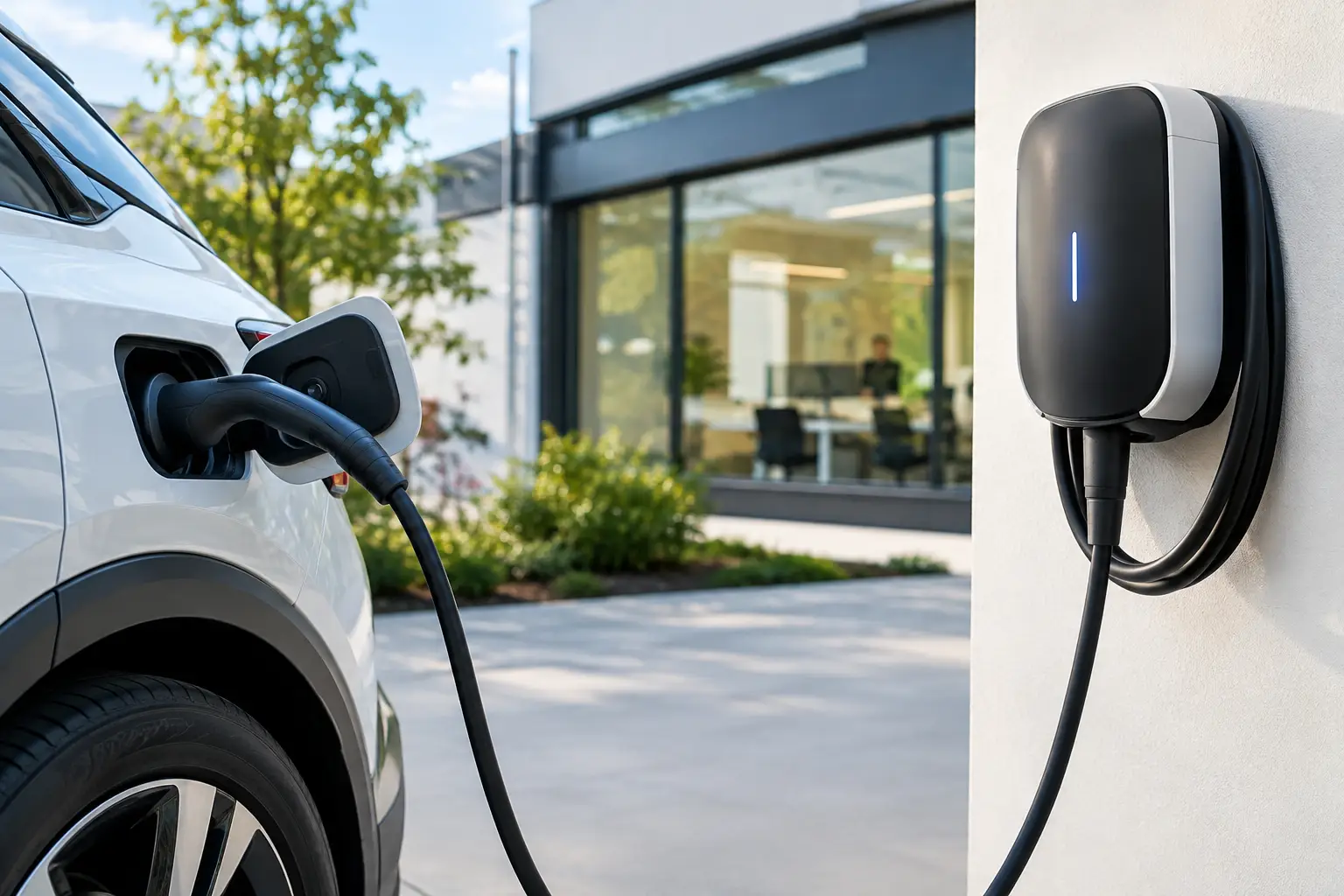
An EV charger installation is not simply a case of fitting a charging unit to an outside wall. The charger needs a correctly designed supply, suitable protection, safe earthing arrangements and proper testing before it is put into use. Get those basics right and charging becomes straightforward, reliable and ready for the way you use your vehicle.
For homeowners, landlords and businesses, the best starting point is not the charger itself. It is the property’s electrical capacity, where vehicles park and how charging will fit around the rest of the building’s energy use.
Start with the electrical supply, not the charger
A dedicated circuit is normally required for an EV charging point. Before any work begins, an electrician should assess the incoming supply, consumer unit or distribution board, existing circuits and likely electrical demand. This determines whether the installation can support the proposed charger safely or whether upgrades are needed first.
At a typical home, the question is whether the supply can accommodate charging alongside cooking, showers, heating, a heat pump, solar equipment and everyday appliances. A modern charger can manage its output dynamically, reducing charging power when the property is using more electricity. This is often a practical alternative to a costly supply upgrade, but it must be designed and set up correctly.
At commercial premises, the assessment can be more involved. A workplace may have several chargers, electric heating, machinery, refrigeration, lighting and IT equipment already placing demand on the supply. Installing charge points without considering the wider load can lead to nuisance tripping, limited charging performance or an installation that cannot be expanded sensibly later.
The right answer depends on the site. A single home charger and a small workplace car park may both benefit from load management, but their design requirements are very different.
Choosing the right EV charger installation
The fastest charger is not automatically the best choice. Most domestic properties use AC charging points, commonly rated at 7 kW where the supply and installation allow. For many drivers, this provides more than enough charge overnight and is considerably more practical than relying on a standard three-pin socket.
Charger choice should reflect how long the vehicle is parked, how far it usually travels and whether more than one electric vehicle is expected in future. A household with one car on the drive has different needs from a landlord serving several flats or a business providing staff and visitor charging.
A smart charger is often the sensible option. It can schedule charging for off-peak electricity periods, monitor demand and, in some cases, work alongside solar generation. This gives the owner more control over running costs, although the savings will depend on the electricity tariff, vehicle settings and when the car is available to charge.
For a business, access control can be just as important as charging speed. Some systems allow charging to be restricted to authorised users, record usage or separate staff, fleet and visitor charging. These functions are useful, but they should be selected because they solve a genuine operational need rather than because they appear on a specification sheet.
Tethered or untethered?
A tethered charger has a cable permanently attached. It is convenient for regular home use, particularly when the vehicle is parked in the same place each day. An untethered charger has a socket instead, so the driver uses their own lead. It can look neater and may suit workplaces where different vehicle connectors are expected.
Neither option is universally better. Cable length, storage, parking position and who will use the charger should guide the decision. A poorly positioned unit can make even a high-quality charger frustrating to use.
Positioning the charger safely and neatly
The best location is usually close enough to the parking space to avoid trailing cables, while remaining accessible for the driver and practical for installation. The cable must not create a trip hazard or cross a public pavement. Where the car is parked on the street rather than on a drive, charging arrangements need particularly careful consideration.
The proposed route for the supply cable matters too. A neat installation considers where cables enter the building, how they are protected externally, and whether drilling, clipping or containment will affect the appearance of the property. At commercial sites, cable routes may need to avoid vehicle movement, loading areas, fire escape routes and areas prone to damage.
For properties around Northwich and across Cheshire, external walls, detached garages and longer drives are common installation scenarios. Each can be accommodated, but distance from the consumer unit affects cable sizing, labour and cost. A site visit provides a more reliable answer than a price based only on photographs.
Weather, impact and everyday use
Charging equipment is made for outdoor use when correctly selected and installed, but it still needs sensible positioning. A charger should be protected from avoidable impact, not obstruct access routes and have a cable that can be stored properly. If it is installed in a busy workplace car park, bollards or other physical protection may be appropriate.
Good workmanship is visible in the details: straight cable runs, properly sealed entries, secure fixings and equipment placed where it will remain practical for years rather than merely passing inspection on the day.
Safety, protection and formal testing
An EV charger is a substantial electrical load used for long periods, often outdoors. That is why the protective devices, earthing arrangement and cable design deserve the same attention as the charger model.
A competent installer will specify the correct circuit protection and ensure the charging point is compatible with the property’s electrical system. Requirements differ between installations, particularly where earthing arrangements or supply characteristics vary. It is not work for an extension lead, an existing garage socket or a general-purpose circuit that happens to be nearby.
Once installed, the circuit should be inspected and tested. The customer should receive the relevant certification and clear information on how the charger operates. In England, electrical work may also require notification under the applicable building regulations. A professional contractor deals with these requirements as part of the job, rather than leaving the property owner to establish whether the work was completed correctly.
Testing is not paperwork for its own sake. It confirms that protective measures operate as intended and provides a useful record for future maintenance, property sales or commercial compliance files.
Solar, battery storage and EV charging
Electric vehicle charging can work well with solar PV and battery storage, but expectations need to be realistic. Solar output changes throughout the day and across the seasons, while many vehicles are away from home during daylight hours. A solar-linked charging mode can direct surplus generation to the vehicle when it is available, helping to make use of electricity that might otherwise be exported.
That does not mean every mile will be solar-powered, nor does it mean a battery should always be discharged into a car. In some homes, keeping battery energy for the evening is more valuable. In others, charging the vehicle during a low-cost overnight period makes better financial sense. The best arrangement depends on household routines, tariff structure, solar generation and the size of the battery.
This is where an integrated electrical approach helps. The charger, solar inverter, battery system and consumer unit must operate together safely. Adding each piece of equipment at different times is possible, but planning ahead can reduce unnecessary alterations later.
Planning for future vehicles and extra charge points
An EV charger installation should not be designed only for this year’s car. If a second vehicle is likely, or if a business expects its fleet to become electric, allow for that from the outset. This may mean installing larger containment, leaving capacity in the distribution board or selecting a charging system that can share available power between multiple points.
For businesses, phased installation is often the sensible route. Install the infrastructure needed for future expansion, then add charge points as demand grows. This avoids repeated disruption to car parks and keeps investment aligned with actual use.
Landlords and developers should consider who is responsible for electricity costs, user access and ongoing maintenance before the first charger is fitted. Retrofitting those arrangements after residents or tenants are already charging can create avoidable disputes.
What affects the cost?
The charger unit is only one part of the cost. The final price is influenced by the cable route, distance from the electrical board, available supply capacity, groundworks, wall construction, protection requirements and whether consumer unit or distribution board upgrades are needed.
A straightforward domestic installation with a short cable route will usually be less involved than fitting a charger to a detached garage or running supplies across a commercial car park. If a quote seems unusually low, check whether it includes testing, certification, protective devices, making good and any required upgrades. A clear scope prevents surprises once work has started.
BMC Electrical Services NW approaches EV charging as part of the wider electrical installation, with the same focus on safe wiring, tidy work and full testing expected for any other circuit. That matters whether the job is one charger at home or a planned workplace charging provision.
A well-planned charger should feel like part of the property, not an awkward addition to it. Choose the location carefully, confirm the electrical capacity before buying equipment and make sure the finished work is properly tested. Then charging your vehicle becomes the easy part.