
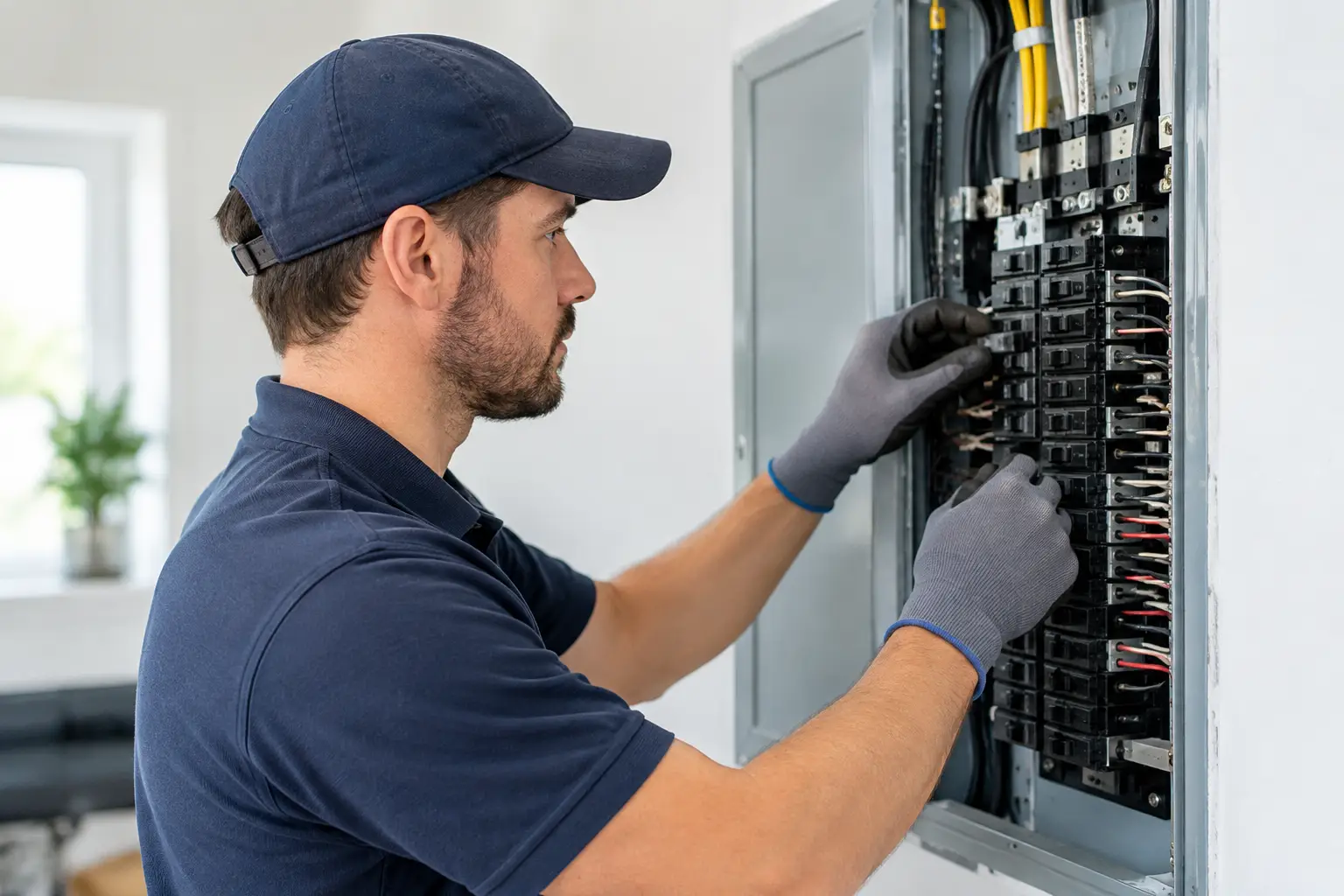
A consumer unit is easy to overlook until something starts tripping, a new circuit is needed or a major home improvement is planned. Yet it is the point that controls and protects every electrical circuit in the property. If it is outdated, poorly installed or no longer suitable for the way you use electricity, a consumer unit upgrade can make the installation safer, easier to manage and ready for future additions.
For homeowners, landlords and businesses, the key is not simply fitting a newer-looking fuse board. The existing circuits must be assessed, the new unit correctly specified and the completed work fully tested. That is how an upgrade delivers a genuine safety improvement rather than just a replacement enclosure.
What does a consumer unit do?
Often called a fuse board, the consumer unit distributes electricity around a property through separate circuits. These may serve lighting, sockets, the cooker, shower, heating controls, outbuildings or specialist equipment. Each circuit needs appropriate protection so that faults can be disconnected quickly and safely.
Older boards may use rewireable fuses or early circuit breakers with limited additional protection. Modern consumer units typically use miniature circuit breakers, residual current device protection and, where appropriate, surge protection. These devices are selected according to the property, the incoming supply and the circuits being served.
A properly designed board also makes fault finding more straightforward. If an issue affects one circuit, it should be possible to isolate it without unnecessarily losing power to the whole building.
Signs a consumer unit upgrade may be sensible
Age alone does not automatically mean a fuse board is unsafe. An older installation can sometimes remain serviceable, provided it is in good condition and has been assessed by a competent electrician. However, certain signs should prompt an inspection and a conversation about replacement.
Repeated tripping is one example, especially where the cause is unclear or the installation has been altered over time. A burning smell, heat around the consumer unit, damaged covers, loose components or signs of moisture need urgent attention. Rewireable fuses, a board with no residual current device protection, and circuits that are not clearly labelled are also common reasons to investigate further.
A consumer unit upgrade is often considered during a kitchen renovation, extension, loft conversion or full rewire. It may also be needed before fitting high-demand or modern electrical equipment, including an EV charger, electric shower, heat pump, Solar PV system or battery storage. These additions can change the demands placed on an installation and need to be designed as part of the wider electrical system.
For landlords and commercial property managers, an Electrical Installation Condition Report can identify defects, missing protection or limitations that affect whether the existing board remains suitable. The report should guide the decision. Replacing a consumer unit will not correct damaged cables, poor connections or unsuitable circuits elsewhere in the building.
Why modern protection matters
The most noticeable difference with a modern board is usually the level of protection available. Residual current devices, commonly known as RCDs, monitor for an imbalance that could indicate current flowing through an unintended path. They are designed to disconnect quickly, reducing the risk of electric shock and fire in certain fault conditions.
Many new installations use RCBOs instead. These combine overcurrent and residual current protection for individual circuits. The practical benefit is better separation: a fault on one circuit is less likely to shut down lighting, refrigeration, alarms or other circuits unnecessarily. It costs more than a basic split-load arrangement, but it can be a worthwhile choice in occupied homes, rental properties and premises where continuity matters.
Surge protection devices may also be appropriate. They help limit damage from transient overvoltages, which can affect sensitive electronics, appliances, controls and connected energy equipment. Whether one is required depends on the assessment and the nature of the installation, rather than being an automatic add-on in every property.
There is no single best layout for every building. A compact flat with a few circuits has different needs from a family home with an outbuilding, a workshop or solar generation. Correct specification comes before installation.
What happens during a consumer unit upgrade?
A professional upgrade begins with inspection, not removal of the old board. The electrician needs to examine the existing installation, identify the circuits, assess the earthing and bonding arrangements, and carry out tests that show whether the cables and accessories are suitable for connection to a new consumer unit.
This stage can reveal issues that have been hidden for years. Insulation resistance problems, borrowed neutrals, damaged cables, unsuitable circuit arrangements or poor connections cannot be ignored simply because a new board is being fitted. Some faults can be rectified during the works; others may require additional repairs or a separate plan before the replacement can proceed.
Once the condition and scope are understood, the power is isolated and the existing consumer unit is replaced. The new board is fitted neatly, circuits are identified and protective devices are selected for each circuit. The installation is then tested again, including checks on polarity, earth fault loop impedance, RCD or RCBO operation and functional performance.
A period without power is unavoidable while the work is completed. In a straightforward domestic property this can often be managed within a day, but the timescale depends on the number of circuits and what testing uncovers. It is better to allow time for correct investigation and remedial work than rush a safety-critical job.
On completion, you should receive the appropriate electrical certification and clear circuit labelling. Keep this documentation with other property records, particularly if you are a landlord, selling the property or planning future electrical work.
Planning for solar, batteries and EV charging
A consumer unit should support how the property will be used over the next few years, not just how it is used today. This is particularly relevant where electrification is planned.
Solar PV, battery storage and EV charging all require careful assessment of the supply, protective devices, cable routes and load demand. A board that is already full, poorly arranged or limited by its rating can make later work more disruptive and more expensive. Leaving sensible capacity for future circuits at the time of the upgrade is usually a practical decision.
That does not mean every property needs the largest available consumer unit or every possible accessory. Overspecifying equipment adds cost without necessarily improving the installation. The right approach is to discuss known plans, such as an electric vehicle, induction hob, garden office or solar installation, so the design can accommodate them where justified.
For business premises, the same principle applies at a larger scale. Workplace chargers, additional machinery, air conditioning and security systems may require distribution changes beyond the consumer unit itself. Load assessment and proper circuit design are essential before equipment is installed.
Choosing the right electrician
Consumer unit replacement is not suitable as a DIY task. It involves work on the main electrical distribution point, testing equipment and an understanding of current wiring requirements. The quality of the work depends as much on inspection, testing and documentation as it does on fitting the board.
Before agreeing to work, ask what assessment will take place, whether faults found during testing will be explained, and what certification will be provided. A clear quotation should distinguish the planned replacement work from any potential remedial work that may only become apparent once the installation is tested.
Tidy workmanship matters too. A well-installed consumer unit has orderly cable routing, properly labelled circuits, secure terminations and sensible space around the board for safe access. Those details make future maintenance safer and less time-consuming.
If you are in Northwich or the surrounding Cheshire area and are considering an upgrade alongside solar, battery storage, an EV charger or security work, coordinating the design early can avoid duplicate visits and unnecessary disruption.
A consumer unit is not the most visible part of a property, but it is one of the most consequential. When it is safe, correctly specified and fully tested, everything connected to it has a better foundation - power, properly wired.