
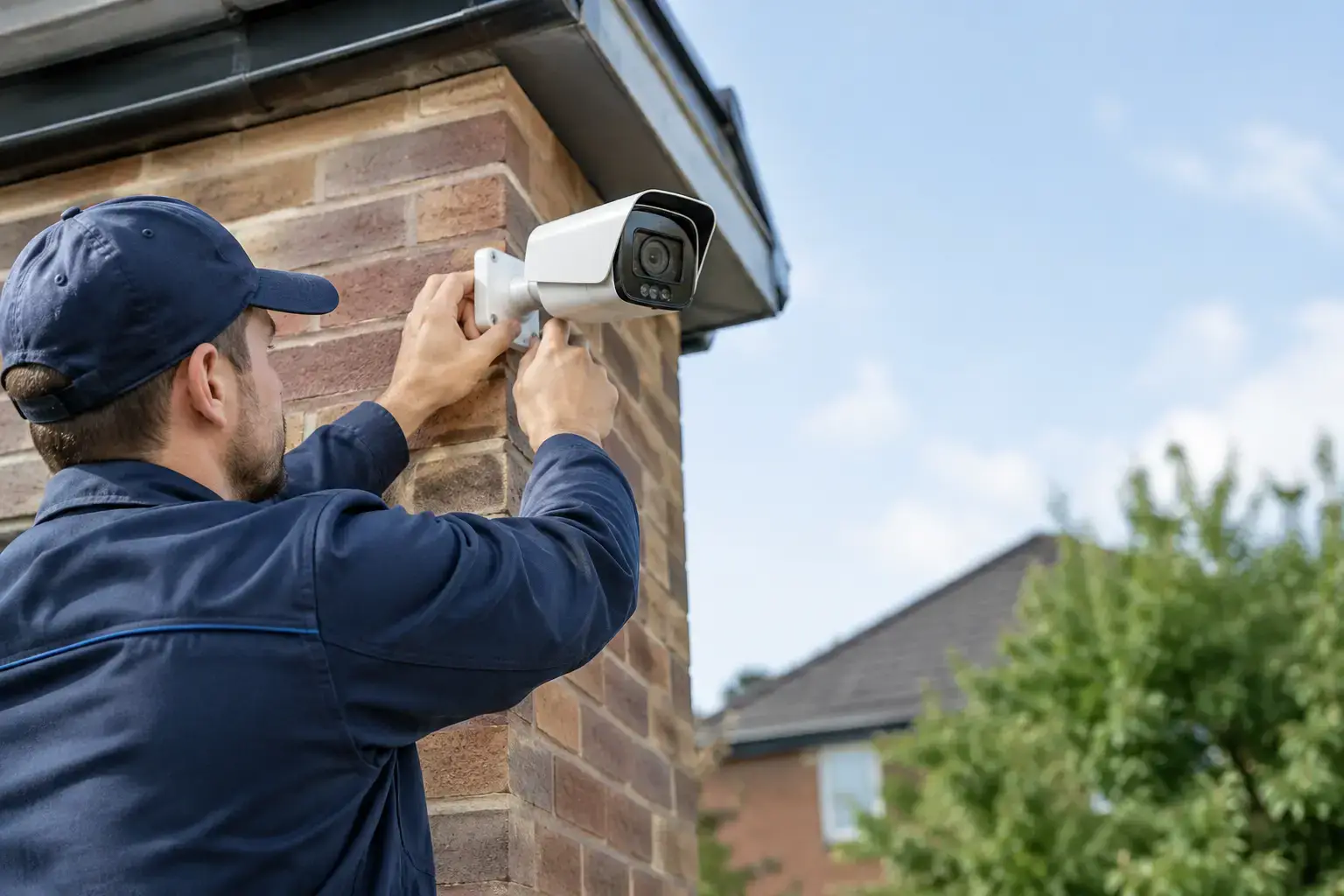
A camera above the front door may deter opportunists, but it will not help much if it only records a hat brim, a blown-out driveway or a patch of darkness. Effective CCTV installation Cheshire property owners and businesses can depend on starts with what needs protecting, when it needs protecting and how footage will actually be used.
For a home, that may mean clear coverage of entrance points, vehicles and side access. For a business, it could mean protecting stock, monitoring delivery areas and providing useful evidence after an incident. In both cases, the installation should be neat, sensibly positioned and supplied from safe, properly installed electrical circuits.
Start with the risks, not the camera count
More cameras do not automatically make a property safer. A four-camera system fitted in the right places can be more useful than eight cameras with poor sightlines. Before selecting equipment, walk the property at the times when it is most vulnerable, including after dark.
Look at approach routes, gates, rear access, outbuildings, parking areas and any place where valuable equipment is stored. Consider where someone could enter without being seen from the house, office or workshop. For commercial premises, include staff entrances, loading bays and external plant areas in the assessment.
It is also worth deciding what you need the system to achieve. Deterrence, live viewing, incident review and evidence gathering are related but different requirements. A visible camera can discourage unwanted behaviour, while a discreet camera may be needed to cover a specific point without creating an obvious blind spot. The right answer depends on the property and the risk.
Camera placement makes the difference
A camera needs a clear view of the area that matters, without being so high that faces are impossible to identify. This is a common compromise: a high mounting position can reduce the risk of tampering, but it may produce footage that looks down on people rather than towards them.
Entrances usually need a camera angle that captures a face as someone approaches. Driveways need enough width to cover vehicles and pedestrians, while retaining sufficient detail to be useful. A rear garden camera may need to cover both the boundary and the route to a door or garage.
Avoid pointing directly towards strong lights, reflective surfaces or the rising and setting sun where possible. These conditions can reduce image quality just when an event takes place. Trees, climbing plants and seasonal changes matter too. A view that is clear in winter can be partly blocked by foliage in summer.
Night-time coverage needs proper planning
Most modern cameras offer infrared night vision, but infrared is not a cure for every poorly lit location. Rain, spider webs, pale walls and nearby reflective objects can interfere with the image. External lighting can improve colour footage and make a site less attractive to intruders, but it must be aimed carefully so it does not glare into cameras or neighbouring properties.
For larger commercial sites, lighting, camera positions and recording equipment should be planned together. A camera system is only as useful as the image it delivers at the point of need.
Choosing the right system for your property
The practical choice is usually between wired, wireless and network-based systems. Each has a place, and the best option is not always the cheapest kit on the shelf.
A wired system is often the most dependable solution for permanent installations. Cables can be concealed or routed neatly, and cameras are less reliant on wireless signal strength. This is particularly useful for detached garages, workshops, offices and premises with several cameras. Installation work may be more involved, especially in finished buildings, but the result is generally more stable and easier to maintain.
Wireless cameras can suit smaller properties or areas where cable routes would be disruptive. However, they still need power unless they are battery-operated, and wireless coverage must be checked properly. Thick walls, metal cladding and distance from the router can affect performance. Battery cameras can be useful for short-term or low-traffic locations, but they need regular charging and may miss activity if settings are too conservative.
Network video recorders, local hard drives and secure remote access give owners more control over footage. Cloud recording can provide an off-site backup, but usually brings an ongoing subscription cost and depends on a reliable internet connection. For many homes and businesses, local recording with controlled remote access is a sensible balance.
Power and cabling should be safe and tidy
CCTV is security equipment, but it is also electrical equipment. Untidy external cables, poorly protected power supplies and makeshift connections create weaknesses that can affect both safety and reliability.
A correctly specified installation considers how each camera will be powered, where cables will run and how external penetrations will be sealed. Cable routes should be protected from weather, accidental damage and easy interference. Equipment should be located where it can be accessed for maintenance without leaving trailing leads or exposed connections.
Where a recorder, power supply or network equipment is installed indoors, it needs a suitable position with ventilation and a stable power source. For business premises, consideration should also be given to continuity of recording during a short power cut. A suitable backup power arrangement may be worthwhile where footage is critical, although it is not necessary for every domestic system.
This is where using one contractor for electrical and security work can make a real difference. BMC Electrical Services NW can plan camera power, cable containment and any related lighting or alarm work as part of one properly coordinated installation.
Recording, notifications and remote viewing
Footage is only useful if it is available when needed. Recording capacity should match the number of cameras, image quality, recording schedule and how long you want to retain footage. Higher-resolution cameras provide more detail, but they use more storage. Continuous recording gives the fullest record of activity, while motion recording can reduce storage use but relies on accurate detection settings.
Motion alerts are useful when they are set with care. A driveway camera that sends a notification every time a car passes, a cat crosses the path or branches move in the wind will soon be ignored. Detection zones, sensitivity and schedules should be configured around the areas and times that matter.
Remote viewing is convenient for checking a home while away or monitoring a business outside working hours. It should be protected with strong, unique passwords and secure account settings. Change default passwords immediately, keep equipment firmware up to date and only provide access to people who genuinely need it.
Privacy matters for homes and businesses
Cameras should primarily cover your own property. Sometimes it is difficult to avoid capturing a small part of a pavement, road or neighbouring land, particularly on terraced streets or shared access routes. If a domestic system records beyond your boundary, data protection obligations may apply. Businesses have wider responsibilities when recording staff, customers or the public.
Position cameras carefully, use privacy masking where available and avoid recording windows, gardens or private spaces that are not relevant to security. Clear signage is often appropriate for commercial premises and can itself act as a deterrent. If you are unsure about your responsibilities, take advice before the system goes live rather than treating privacy as an afterthought.
CCTV installation in Cheshire: plan for the whole property
A camera system works best when it supports the wider security and electrical setup. External lighting, alarms, access control, gates and sensible physical security all have a role. CCTV should not be expected to compensate for a weak rear door, an unsecured side gate or a poorly lit access route.
For landlords and property developers, planning cabling before decoration or handover can reduce disruption and leave a much cleaner result. For established homes and businesses, a site survey helps identify routes that protect the fabric of the building and keep visible wiring to a minimum.
A properly planned system gives you more than a live picture on a phone. It provides useful coverage, reliable recording and confidence that the installation has been carried out with the same care as the rest of the electrical work. Start with the risks at your property, then specify cameras and equipment to meet them - power, properly wired.